ServicesMold Remediation
Mold Remediation in Bensley
Mold in your home usually means water got somewhere it should not be. We find that moisture, contain the affected area, remove the growth and the materials it has ruined, then dry everything out. You get photos of what we found and what we did.
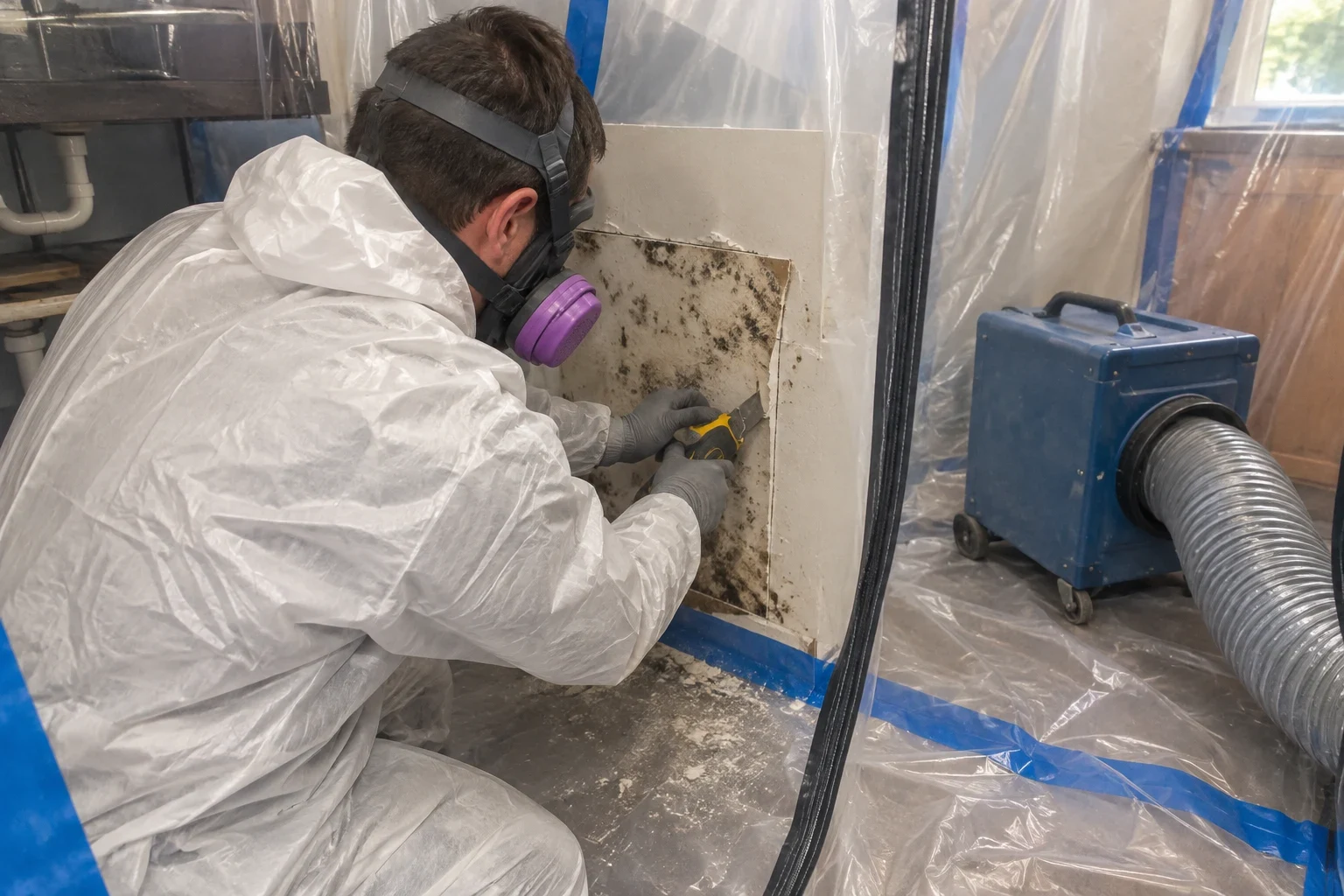
Getting rid of mold, and the water behind it
Mold needs moisture to grow. A slow leak under a sink, a damp crawl space or drywall that never fully dried after a pipe burst can all start growth within a day or two. Wiping the surface clean rarely solves it, because the real problem sits in the wet material and the water source that keeps feeding it.
Our mold remediation work starts by tracking down that moisture, then removing the mold in a way that keeps spores from drifting into the rest of your home. We photograph the area before we touch it, during removal and after cleanup, so you can see exactly what was behind the wall and what was taken out.
If the mold came from a fresh leak or flood, we can also handle the water extraction, drying and dehumidifying, and repairs and rebuild that follow, so one crew sees the job through.
What our mold remediation includes
- Moisture mapping
- We use moisture meters to check walls, floors and framing around the visible growth. Mold is often wider than the stain you can see, and the readings tell us where to stop cutting.
- Containment
- Before any material comes out, we close off the work zone with poly sheeting and zippered doors, then set up HEPA air scrubbers that pull air out of the space. Because air flows in rather than out, loose spores stay put instead of drifting into your hallway or ductwork.
- Removal of damaged materials
- Porous materials like drywall, insulation and carpet pad that have mold growing in them are cut out and bagged inside the containment. We document each section before and after it comes out.
- Cleaning what stays
- Wood framing, subfloor and other solid surfaces are HEPA vacuumed, scrubbed and treated. Stained wood may be sanded so the clean surface is visible.
- Drying and a final check
- We dry the area to normal moisture levels and recheck it with meters before containment comes down. You see the final readings before we pack up.
Signs you may need mold remediation
A musty smell that keeps coming back
An earthy odor in a closet, basement or bathroom often means growth you cannot see yet, usually behind drywall or under flooring.
Spotting or staining on walls and ceilings
Gray, green or black spots, or a yellow-brown ring that spreads, point to ongoing moisture. Painting over it only hides it for a while.
Water damage that was never fully dried
If a leak or overflow was mopped up but the walls stayed damp for days, mold may already be inside the cavity.
Peeling paint or warped baseboards
Bubbling paint, soft drywall and swelling trim are signs that moisture has been sitting in the material long enough to feed growth.
Damp crawl spaces and basements
Long, humid Virginia summers keep crawl spaces and basements damp, and wet insulation or framing there is a common place for mold to settle in.
What drives the price of a mold job
We price mold remediation from the inspection, not from a flat rate. Once we have looked at the area, you get a written estimate, and we walk through it line by line so nothing is a mystery. Sometimes more growth shows up after a wall is opened. When that happens, we pause, show you the photos and agree on the next step together before going further.
How much area is affected
Growth behind one bathroom vanity is a much smaller job than mold running along a basement wall or across an attic deck.
Materials that have to come out
Cutting out and hauling away drywall, insulation, carpet and pad adds labor and disposal. Solid framing we can clean where it stands keeps the cost lower.
Access and containment setup
Attics, crawl spaces and furnished rooms take more time to prepare. Bigger or awkward spaces need more sheeting and more air filtration units to seal properly.
Whether water is still present
An active leak or standing water means extraction and drying join the job. The source also has to be fixed, or the mold will come back.
Rebuilding afterward
New drywall, trim, flooring and paint are priced separately from removal. If you would like one crew from start to finish, our repairs and rebuild service covers it.
How a mold job runs
- 1
Inspection on site
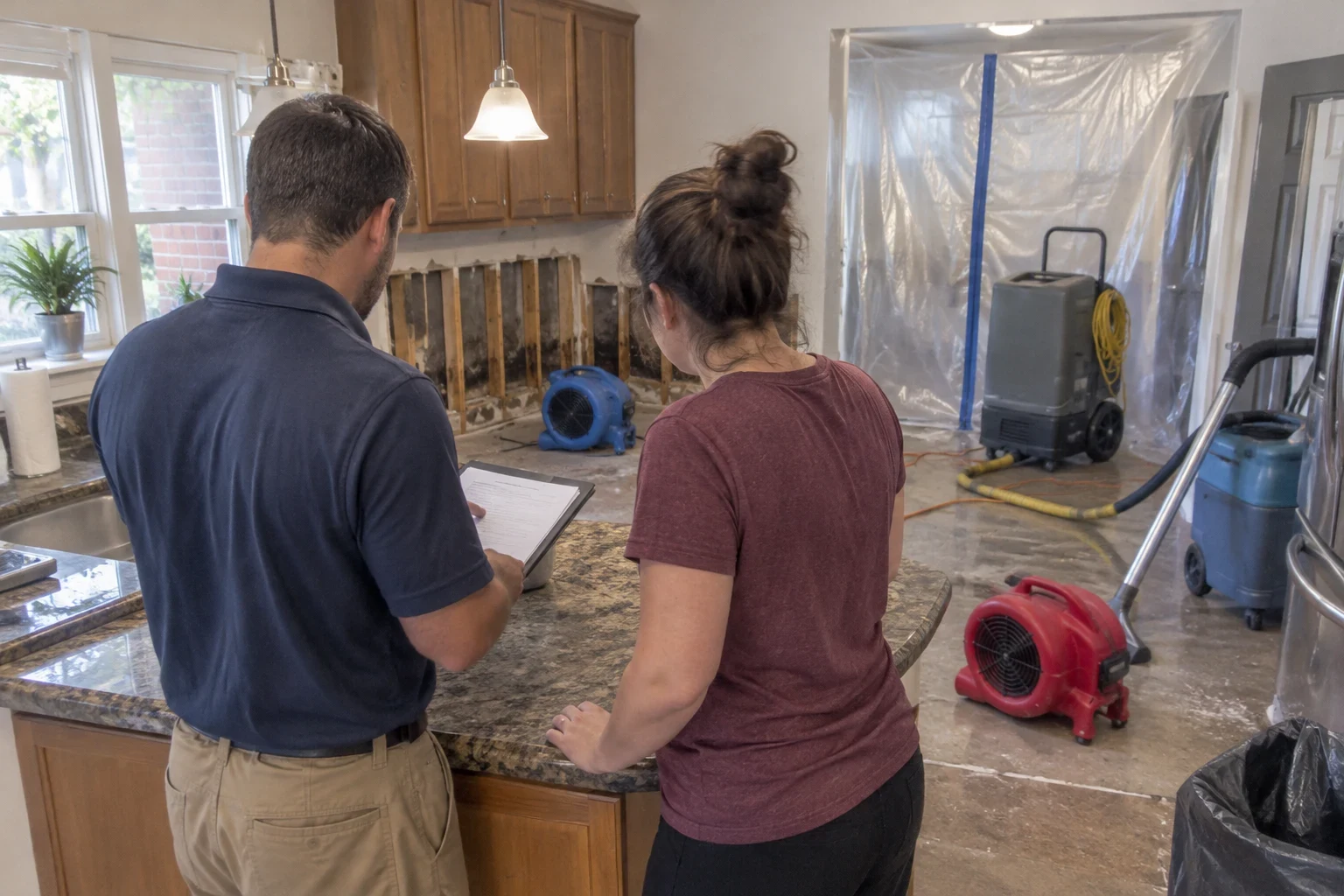
We go room by room with you, check the walls and floors with moisture meters and record what turns up on camera. You get a plain answer on how far the mold reaches and what needs to come out.
- 2
Written scope before work starts
We explain what we plan to remove, clean and dry, and what it will cost, before anything begins. If the water source needs a plumber or roofer first, we tell you that up front.
- 3
Containment and removal
We set up sheeting and air filtration, protect the floors along our path, then remove and bag the damaged materials. Each wall or ceiling section is documented as it is opened.
- 4
Cleaning, drying and recheck
Remaining surfaces are cleaned and treated, the space is dried, and we confirm normal moisture readings before we take containment down and clean up.
- 5
Your photo record
You receive the before, during and after images along with the moisture readings. They are useful for your own records and for any insurance claim.
Mold remediation questions
Is bleach enough to clean up mold myself?
A small spot on tile or another hard surface can often be cleaned carefully on your own. Bleach will not reach growth inside drywall or wood, though, and scrubbing a wide area can push spores into other rooms. If the patch is more than small or keeps coming back, have us take a look.
Does homeowners insurance pay for mold removal?
It usually depends on what caused it. Many policies handle mold from a sudden event, like a burst supply line, differently from mold that grew out of a slow leak nobody noticed or from long-term humidity. We work with most major insurance companies, and our photos and moisture readings help show what happened, but the coverage call belongs to your adjuster.
Can we stay in the house while you work?
In most cases, yes. The containment and negative air setup keep spores inside the work zone so the rest of your home stays livable. On very large jobs, or if someone at home has asthma or other breathing issues, we will talk with you about whether a day or two away is the better choice.
How long will the job take?
A small, sealed-off area can often be removed and cleaned in one day, followed by drying time. Jobs that reach into several rooms, a crawl space or an attic run longer. After the inspection, we give you a timeline for your specific job.
How fast can someone come out?
When water is actively causing damage, our emergency response runs around the clock, and we are on site in 60 mins or less. If the mold is not tied to a new leak, we can book a free on-site inspection at a time that works for you.
How can I tell the mold is actually gone?
We check moisture levels again and look over every cleaned surface before the containment comes down. You also get photos of the opened area, the removal and the finished space. That way you can see the result for yourself.
Seeing mold or smelling something musty?
Tell us what you are noticing and we will set up a free on-site inspection. If water is still coming in, we will send a crew right away and start with the source.