ServicesFlood Cleanup
Flood Cleanup in Bensley, VA
When storm water or surface runoff gets into your home, we come out fast, pump it out, pull what can't be saved and clean what can. You get photos of every step, so you and your insurance company can see exactly what happened and what we did.
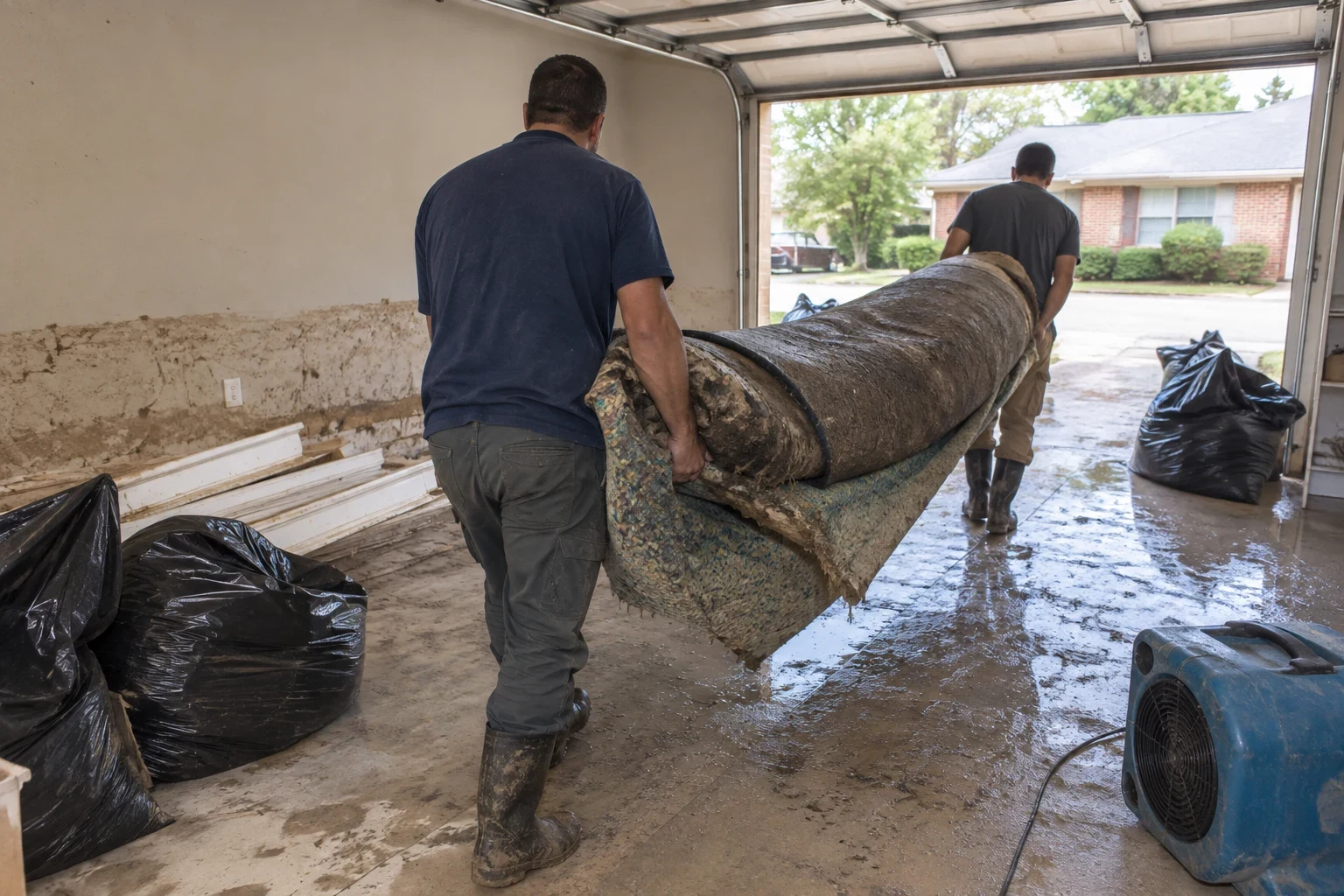
When outside water gets into your home
Rain forcing its way through a foundation wall, a lawn that slopes toward the house, a storm that fills the crawl space: these are the jobs flood cleanup handles. Runoff and groundwater pick up soil, lawn chemicals and bacteria on the way in, so we treat that water as contaminated from the first minute. If the leak started at a clean supply line instead, water extraction and drying and dehumidifying are often enough on their own.
Summer thunderstorms and leftover tropical systems can drop inches of rain on Bensley in a single afternoon. A real person answers our line at any hour, and our promise of being on site in 60 mins or less stands on nights and weekends as well.
Nothing gets moved or torn out until we have photographed the water line, each damaged room and your belongings. You have a clear record starting in the first hour, and no one has to rely on our word about what got wet.
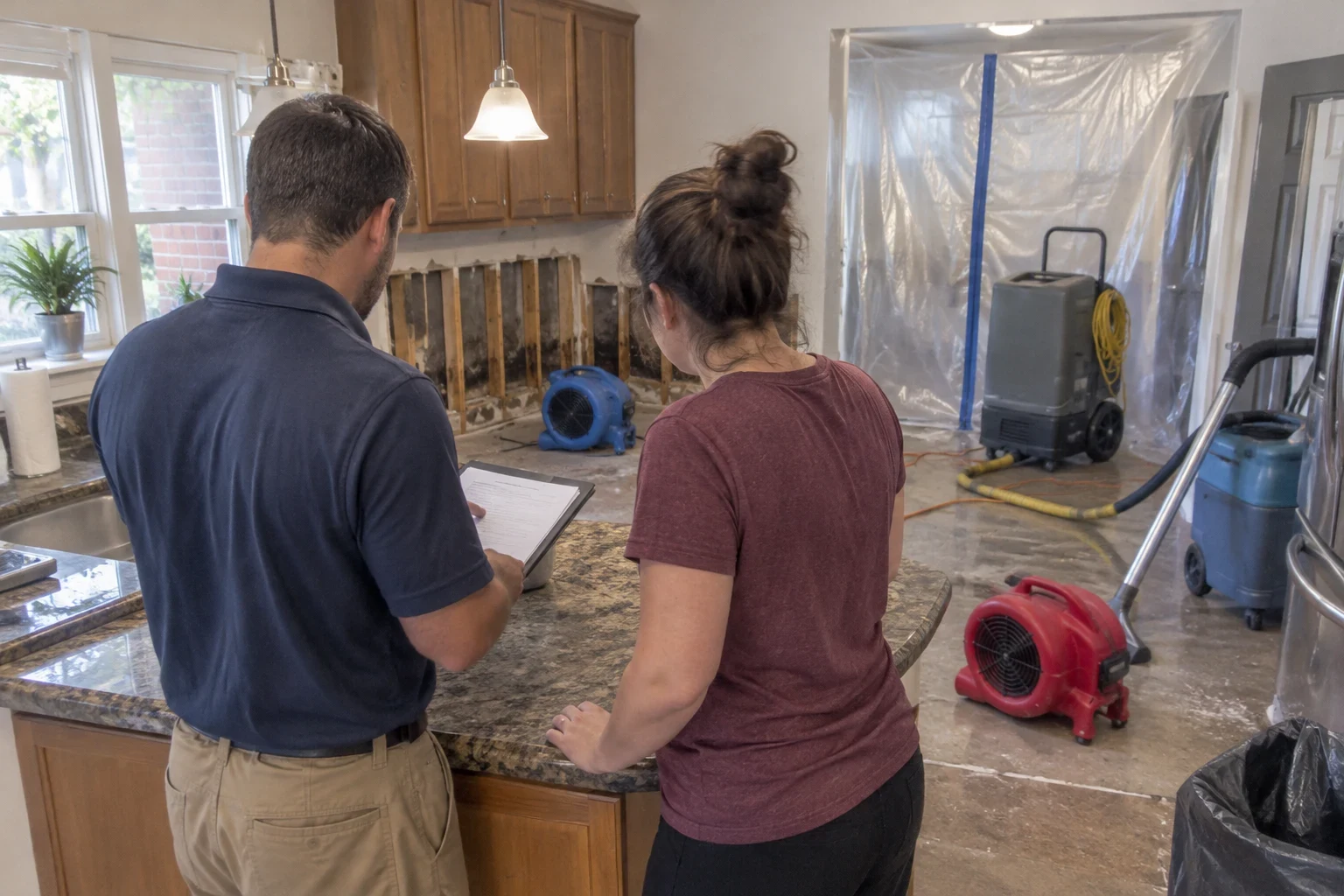
What the work includes
- 01
Pumping out standing water
Submersible pumps handle deep water in basements and crawl spaces. Then we go over carpet and hard floors with extraction wands to pull out what the pumps leave behind.
- 02
Removing soaked materials
Carpet pad, wet insulation and drywall below a flood cut, usually a foot or two above the highest water mark, come out. Drywall wicks floodwater upward and holds bacteria, so cutting it out is what lets the wall cavity dry and be cleaned properly.
- 03
Cleaning and sanitizing
We shovel and wash out mud and silt, then apply an antimicrobial to studs, subfloor and slab. Every surface the water touched gets treated, not just the ones you can see.
- 04
Sorting your belongings
We help you separate what can be cleaned from what should go. Items headed to the curb are logged one by one before they leave, which makes your contents claim far easier.
- 05
Setting up the dry-out
Air movers and dehumidifiers go in once the space is clean. We take moisture readings each visit and log them, so you can watch the numbers come down.
Questions about Flood Cleanup?
Call(804) 603-9734Signs your home needs flood cleanup
Standing water after a storm
Water pooled in the basement, crawl space or along a slab floor needs to come out quickly. The longer it sits, the more it soaks into wood and drywall.
A muddy line on the walls
A brown stain or silt line on drywall or baseboards shows how high the water rose. Anything below it has been in contact with dirty water, even if it looks dry now.
A musty smell days later
If the water drained away but the room still smells damp, moisture is trapped under flooring or inside walls. That is where mold gets its start.
Swelling floors or trim
Cupped hardwood, bubbling laminate and puffy baseboards mean water got underneath. Pulling the floor up is usually the only way to dry the subfloor.
Equipment sat in the water
If your furnace, water heater or electrical panel was touched by floodwater, keep clear and have it checked before using it again.
How a flood cleanup day runs
- 1
Your call and our arrival
We ask where the water is and how deep it looks, and tell you what to keep away from until we get there. Then we head your way and arrive in 60 mins or less.
- 2
Safety check and first records
We check for electrical hazards and measure the water. Then we photograph every affected room before touching anything.
- 3
Water and ruined materials out
Pumps and extractors remove the water. We make the flood cut, pull wet insulation and flooring, and record what turned up behind the walls so you can see it too.
- 4
Clean, sanitize and dry
Silt is washed out, surfaces are treated and drying equipment goes in. We return to take readings and adjust the setup until the structure reaches dry standard.
- 5
Final readings and next steps
You get the full photo record and moisture logs. If walls or floors need to be put back, our repairs and rebuild crew can pick up from there.
What moves the price of a flood job
Water in one corner and a soaked finished level are two very different jobs, so we don't guess at a number before we've seen the space. It starts with a free on-site inspection, and then we walk you through a written, line-item estimate. We work with most major insurance companies. Each line on that estimate is backed by the photos and readings we took in your home, so your adjuster can see why every item is there.
- How much area got wet
- One corner of a basement is a smaller job than water across a whole finished level. Square footage drives pump time, removal and the amount of drying equipment.
- How long the water sat
- Water that is pumped out within hours does less damage than water left for days. Longer exposure means more material to remove and more sanitizing.
- What has to come out
- A bare crawl space with gravel and joists costs less to clean than a finished basement with carpet, drywall, built-ins and trim.
- Contents and access
- Heavy furniture, stored boxes and tight crawl spaces add labor. So does carrying debris up narrow stairs.
Common worries after a flood
Does flood damage fall under my homeowners policy?
That comes down to the source of the water and the wording of your policy. Plenty of standard homeowners policies leave out surface flooding, which is then handled through a separate flood policy. We aren't your adjuster, but we can pass our documentation, readings and estimate to your carrier so the claim rests on clear evidence.
Should I start cleaning up before you get there?
Keep it to the safe basics. Stay out of water near outlets or appliances, shut off power only if you can reach the panel without stepping in water, and move dry valuables higher. Snap a few pictures on your own phone, and hold off on tearing anything out so the damage can be documented first.
Do you really have to cut out my drywall?
If floodwater touched it, usually yes. Drywall soaks up contaminated water and can't be sanitized inside, and the insulation behind it holds moisture. We cut a straight line above the water mark so the repair later is clean and simple.
How long until my home is dry?
Most structures dry in several days once the wet materials are out, though dense wood, plaster or a deep crawl space can take longer. We decide when it is dry by moisture readings, not by the calendar, and we show you those readings.
What if mold has already started?
Mold can begin growing within a day or two on wet materials. If we find it during cleanup, we document it, show you where it is, and handle it through our mold remediation service instead of simply drying over it.
Let's get the floodwater out of your home
Tell us what you're seeing and we'll head your way, day or night. If the water is already gone but you're unsure what it left behind, we can come out for a free on-site inspection.