ServicesDrying and Dehumidifying
Drying and Dehumidifying in Bensley, VA
After a leak or flood, the water you can't see does the most damage. We find it with meters and a thermal camera, dry it with the right equipment, and photograph every reading, so you can watch your home get back to dry.
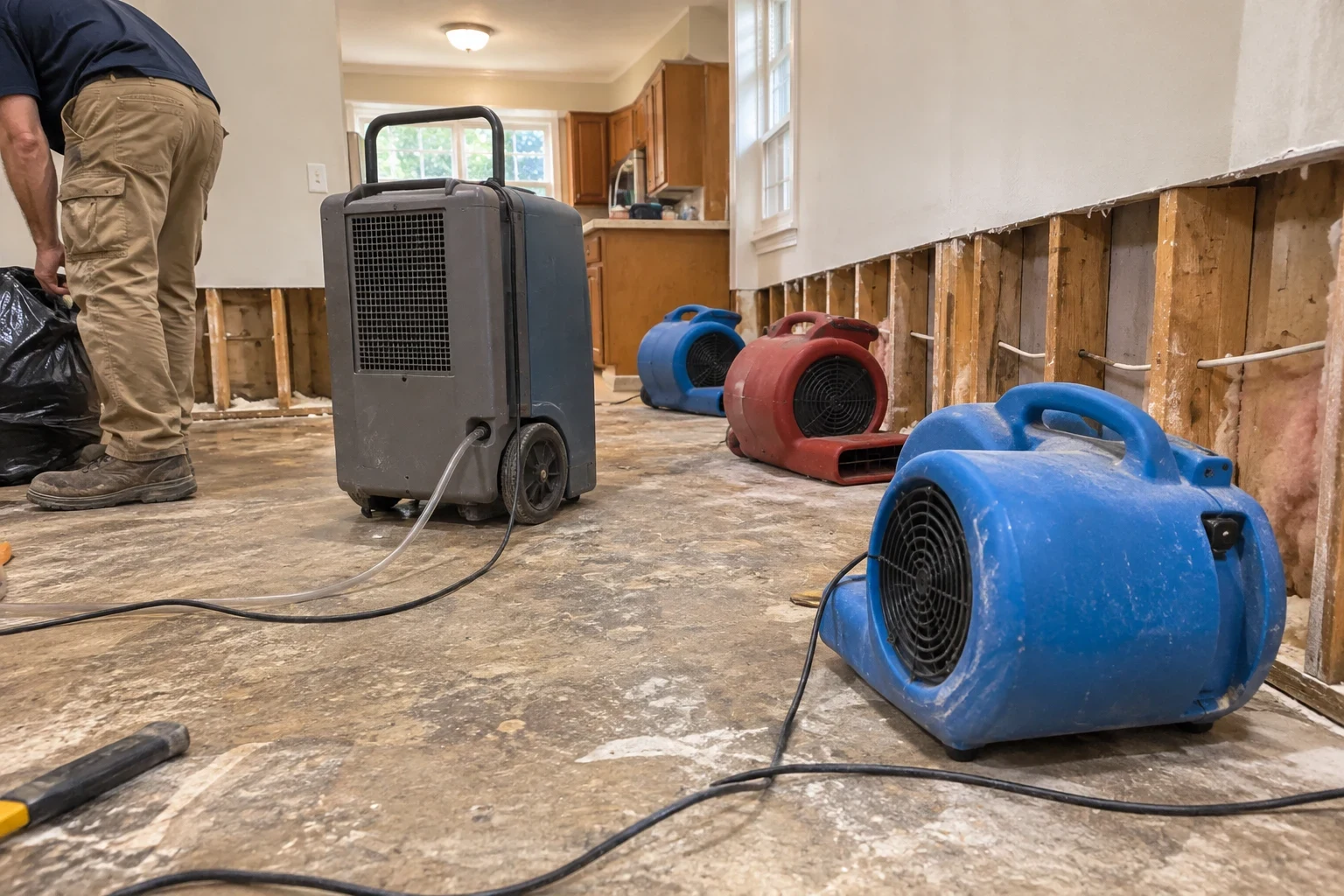
Getting the water out is only the first half
Once the standing water is gone, plenty of it is still in your home. Drywall wicks moisture up from the floor, subfloors and framing soak it in, and carpet pad stays wet underneath even when the top feels dry. Left alone, that hidden water warps hardwood, swells cabinet bases and gives mold a start within a couple of days.
Drying and dehumidifying is the controlled process of pulling that moisture back out. Air movers push air across wet surfaces, dehumidifiers capture the water that evaporates, and we keep measuring until materials reach normal levels. It usually follows water extraction, and it is the step that keeps a leak from becoming a mold remediation job.
At every visit we photograph the meter next to the spot we tested. You see the numbers drop for yourself, and you have a clear record to share with your insurance adjuster.
What our drying work covers
- 01
Moisture mapping before setup
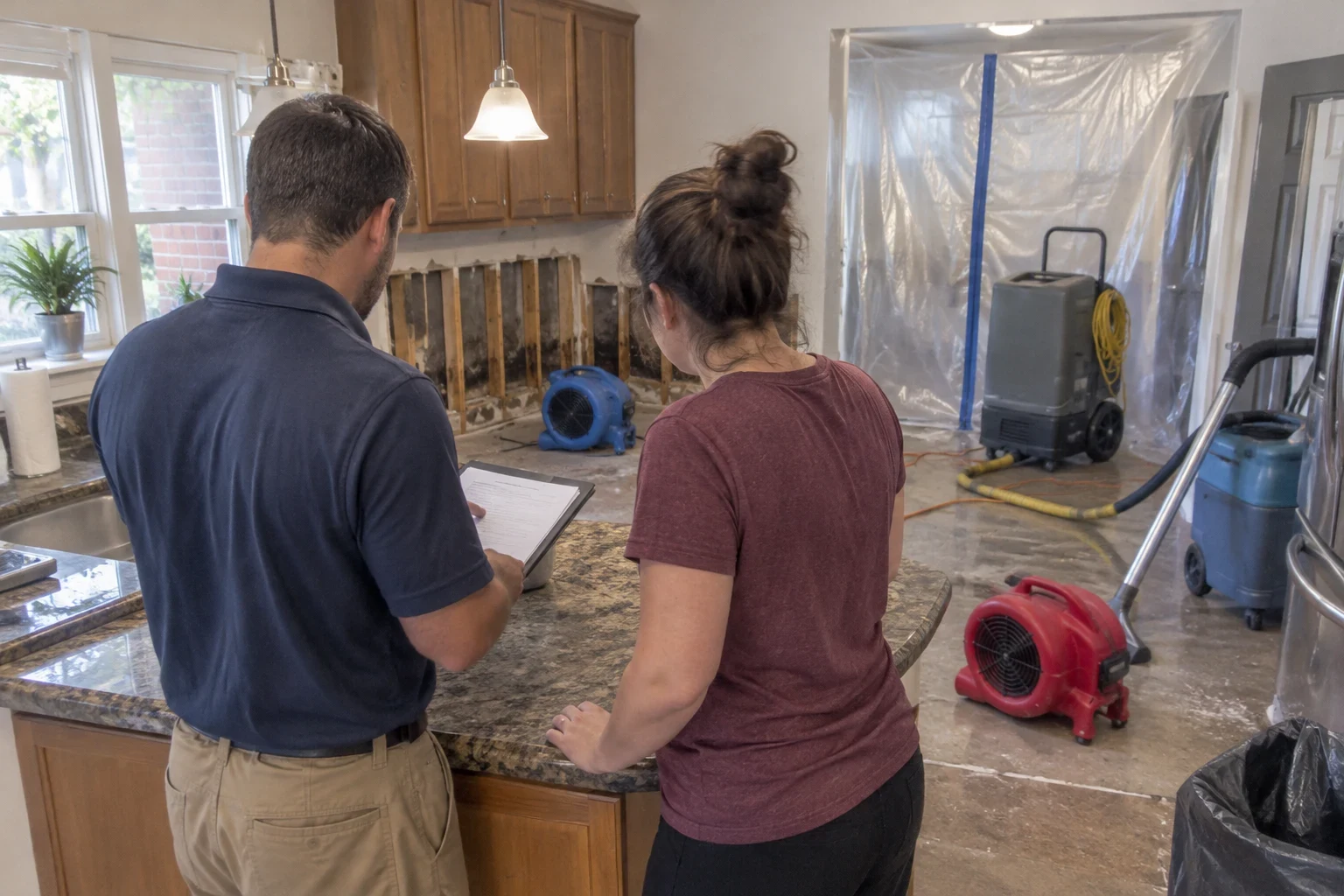
Our techs test drywall, subflooring and ceiling panels with two kinds of moisture meter, one that probes and one that scans the surface, plus an infrared camera. We mark where the wet area stops and take pictures of the boundary, so the drying plan follows what's actually wet instead of a guess.
- 02
Equipment sized to the room
We place air movers and dehumidifiers based on the square footage and how much material got wet. Low-grain dehumidifiers keep pulling water from the air even after the room starts to feel dry.
- 03
Drying inside walls and cabinets
When water runs behind drywall or under cabinets, we can drill small holes near the baseboard or pull the toe kick to push air into the cavity. That often saves the wall from being torn out.
- 04
Crawl space and basement drying
Water under the house needs drying too. We set equipment below the floor so moisture doesn't wick back up into joists and subfloor.
- 05
Daily readings you can see
We come back to take readings, adjust equipment and log results. Each reading is photographed, so progress is never just our word.
- 06
Antimicrobial treatment where needed
On materials that stayed wet for a while, we apply an antimicrobial to slow mold growth while drying is underway.
Questions about Drying and Dehumidifying?
Call(804) 603-9734Signs your home still needs drying
A musty smell that won't fade
If the room still smells damp days after the leak, moisture is trapped somewhere. That smell is often the first warning before mold shows up.
Cupping or soft floors
Hardwood boards that curl at the edges, or a subfloor that gives underfoot, are holding water from below.
Bubbling paint or swollen trim
Paint that blisters and baseboards that puff up at the bottom mean the wall is wet behind the surface.
Sticky air and foggy windows
In humid Virginia summers, a wet room can stay muggy no matter how long the AC runs. Condensation on windows is a sign the air is carrying too much water.
Carpet that feels dry but isn't
Press down on the carpet near where the water was. If the pad underneath feels cool or damp, it is still wet.
How a drying job runs
- 1
Free inspection and readings
We come out for a free on-site inspection, and for urgent calls we are on site in 60 mins or less. We map the moisture, document what we find with pictures and explain what needs drying and what may need to come out.
- 2
Removal and equipment setup
Anything that can't be dried, like soaked carpet pad or crumbling drywall, is shown to you before we remove it. Then we set air movers and dehumidifiers and protect the rest of the room.
- 3
Daily monitoring
We check readings, move equipment as areas dry and empty or adjust dehumidifiers. You get the photos from each visit so you always know where things stand.
- 4
Final readings and handoff
We pick up equipment once readings match a dry spot in an unaffected part of your home. You receive the full photo record. Any drywall, trim or flooring that has to be replaced can be handled through our repairs and rebuild service.
What affects the cost of drying
Drying is priced by the work it takes to bring your home back to normal moisture levels, so two leaks that look the same can land at different amounts. Before any equipment goes in, we walk you through what is driving the job. We work with most major insurance companies. If you have a claim open, we can explain how drying is usually documented and share our photo record, while the coverage call stays with your adjuster.
- How far the water spread
- One wet bathroom floor needs far less equipment than water that ran under walls into two rooms and the hallway.
- Materials that got wet
- Hardwood, plaster and dense subfloors take longer to dry than drywall or tile, and some need specialty drying mats.
- Time and water type
- Water that sat for days, or gray water from an appliance, may mean more removal and antimicrobial treatment before drying can start.
- Access to the wet areas
- Crawl spaces, finished basements and built-in cabinets take more work to reach and dry properly.
Drying and dehumidifying questions
How long does drying usually take?
For clean water caught early, many rooms dry in three to five days. Plaster walls and solid hardwood hold onto water and may need a few extra days. The meter numbers decide when we're finished, not a set schedule, and after the first visit we'll give you our best estimate.
Can I just run fans and my own dehumidifier?
Household fans move air but don't reach inside walls or under floors, and a small dehumidifier can't keep up with a soaked room. You might dry the surface while the framing stays wet. If you want to try, we can still take readings to check whether it worked.
Can we stay in the house while the equipment runs?
Usually, yes. The equipment hums and makes the room warmer, so most people keep the door closed and sleep elsewhere in the house. Please leave it running and plugged in, since turning it off resets the progress.
Can my hardwood floors be saved?
Often they can, especially if drying starts quickly. We use drying mats that pull moisture up through the boards and share the readings so you can see whether they are recovering. If a section can't be saved, we show you why before anything comes up.
Why would you cut holes in my walls?
Small holes near the baseboard let us push dry air into the wall cavity without removing the whole wall. They sit low, get patched afterward and are much smaller than replacing soaked drywall.
Wet floors or walls? Let's get them drying
Tell us what happened and where the water went. We'll come out, take readings and show you exactly what's wet before anything else happens, in Bensley and nearby towns like Chester and Bon Air.