Can You Live in a House With Water Damage in Bensley?
Plenty of families stay put while their home dries out, but a few clear warning signs mean it is time to pack a bag for a few nights.
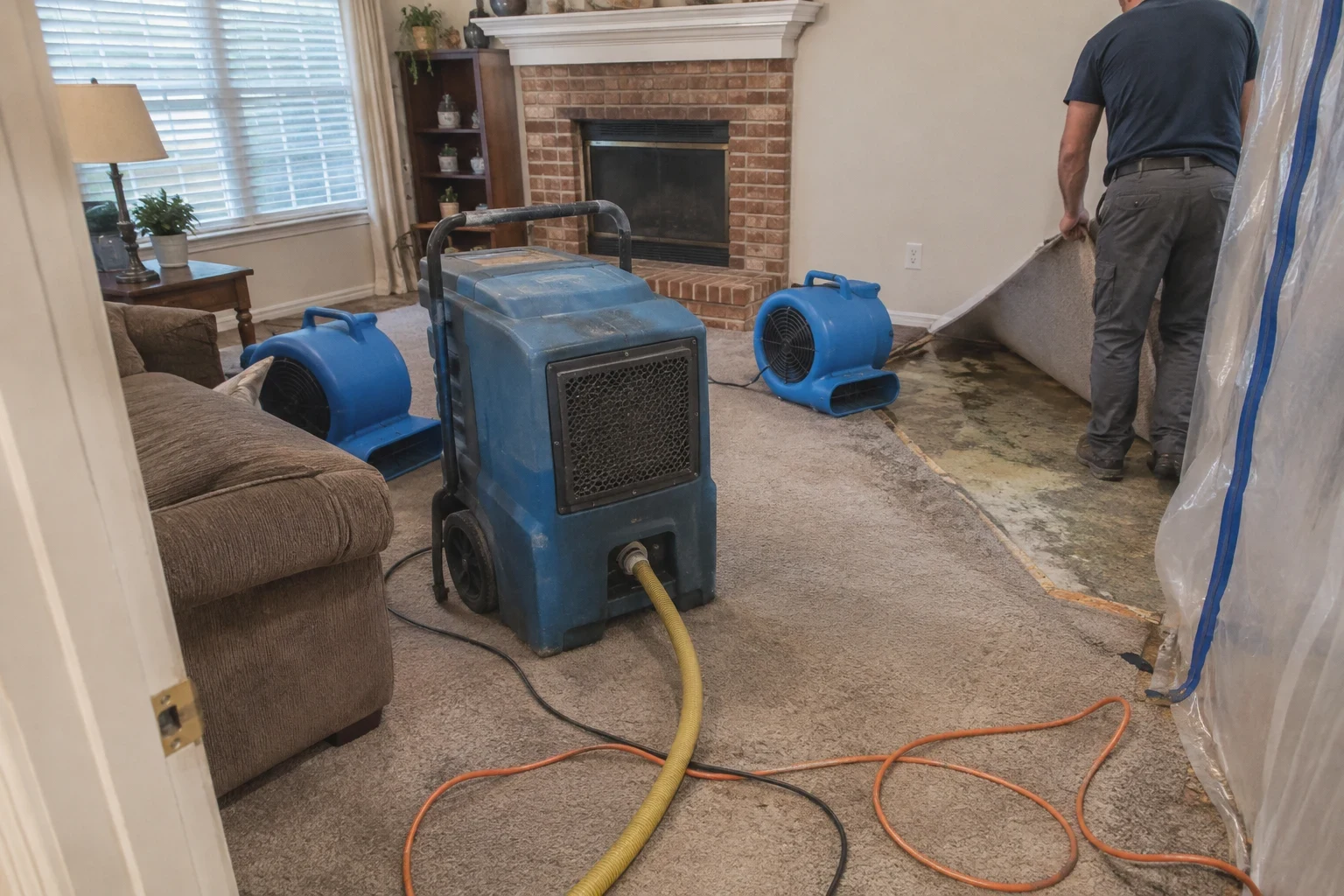
Can you live in a house with water damage?
Often, yes. If the water was clean, the area is small, the power is safe and no one in your home has breathing problems, you can usually stay while it is dried. Leave if the water came from sewage, touched outlets or wiring, or a ceiling is sagging. A free inspection settles it: (804) 603-9734.
When is it usually fine to stay home?
Most water damage starts with clean water: a burst supply line, a leaking water heater, an overflowing tub or a dishwasher hose that let go. When that water is caught early and stays in one or two rooms, most families keep living in the rest of the house while we work. You close the door to the wet area, keep pets and kids out, and put up with the hum of air movers for a few days.
The key word is early. Clean water does not stay clean for long once it sits in carpet pad, drywall and subfloor. That is why fast water extraction matters so much. The less water left behind, the shorter the drying time and the less likely the job grows into mold or rebuild work.
- The source was a clean supply line, not a drain or toilet
- The wet area is limited and you can close it off
- Power to the affected rooms is off or was never touched by water
- Ceilings and floors feel solid underfoot and overhead
- No one in your home has asthma, a weak immune system or a new baby
Signs it is not safe to live there right now
Some situations are not worth the risk, even for one night. Water from a backed-up toilet, a sewer line or outside floodwater carries bacteria and other contaminants. It soaks into anything porous it touches. Until sewage cleanup is done and the area is disinfected, it is safer to stay with family or a friend.
Electricity is the other big one. If water reached outlets, a breaker panel, baseboard heaters or extension cords on the floor, do not walk through standing water to check. Turn off the main breaker only if you can reach it from a dry spot. Otherwise, wait for help outside the wet area.
Watch the ceiling, too. A brown stain that is growing, a bulge in the drywall or a steady drip from a light fixture means water is pooling above. That ceiling can come down without much warning.
- Sewage, toilet overflow or outside floodwater
- Water near outlets, the panel or appliances that are still plugged in
- A sagging or bulging ceiling
- A strong musty smell or visible mold spreading on walls
- Anyone in the house feeling sick, wheezy or getting headaches
What happens if you stay and the water is not dried properly?
This is the part people do not see. Water wicks up drywall, travels under flooring and settles into wall cavities and crawl spaces. The surface can look dry in a day while the materials behind it stay wet for weeks. In central Virginia, our humid summers make that hidden moisture linger even longer, and that is when mold gets a foothold.
Living with damp materials can mean warped hardwood, peeling paint, a smell that will not leave and mold behind the baseboards. It can also make allergies and asthma worse for anyone sleeping nearby. Proper drying and dehumidifying uses moisture meters to find the wet spots you cannot feel, then dries them down to normal levels before anything gets sealed back up.
What to do in the first few hours
Stop the water first. Most homes have a main shutoff near where the water line enters, often in the basement, crawl space or a utility closet. If you cannot find it, the valve at the meter works too. Then take care of people and pets before property.
Before you move anything, take photos and short videos of the water, the source and the damaged items. Your insurance company will want to see what happened. We do the same thing when we arrive: we photograph what we find, take moisture readings, and keep photos at each step of the work so you and your adjuster can see exactly what was done.
- Shut off the water at the main valve
- Turn off power to wet rooms if you can do it from a dry spot
- Move rugs, electronics and keepsakes to a dry room
- Photograph everything before cleanup begins
- Skip the household fans and shop vac on sewage or ceiling leaks
How we help you decide whether to stay
We offer emergency water damage response, and we are on site in 60 mins or less. Once we are there, we walk the house with you, check the wet areas with meters, and tell you plainly whether staying is reasonable. If it is, we set up containment so the work stays in one part of the house and the rest of your home stays livable.
If the damage is bigger, we explain what needs to happen first, what can wait and how long the drying will likely take. We work with most major insurance companies, and our photo records help you show your adjuster what was found. When the drying is finished, our repairs and rebuild work puts the drywall, flooring and trim back so the room is ready to use again.
More questions about staying home during water damage
- Can I sleep in a room that had a small leak?
- If the leak was clean water, it has been dried properly and there is no smell, usually yes. If the carpet or walls still feel damp, sleep somewhere else until a moisture check confirms the room is dry.
- Is the noise from drying equipment going to be bad?
- Air movers and dehumidifiers run day and night and make a steady hum, a lot like a box fan. We place them to dry the wet areas and can close doors to keep the sound down in the rooms you are using.
- Do I need to leave for mold remediation?
- For small, contained areas, many families stay while we seal off the space. For larger mold growth, or if anyone has breathing issues, it is often better to be away until the work and cleanup are done.
- Will my insurance pay for a hotel?
- Some policies include coverage for extra living costs when a home is unsafe to live in. Check your policy or ask your adjuster, and keep receipts along with the photos of the damage.
Not sure if your home is safe tonight?
Tell us what happened and we will come out, check the wet areas with meters and give you a straight answer about staying. The inspection is free, and you get photos of everything we find.